
Sakata Group Guidelines for Logistics Quality Management
“Continuous Operations Improvement” and “Customer Proposals”
- Engage in continuous “Operations Improvement” at all business locations.
- If necessary, review traditional workflows from zero-base without hesitation.
- Provide constant proposals to all customers and partners.
 Initiatives for Improving Logistics Quality
 Winner of the Excellent Case Award 2009
 Introduction of Office Quality Initiatives
 Initiatives for Improving Logistics Quality
(1) Analysis and Improvement through Numerical Data
|
|
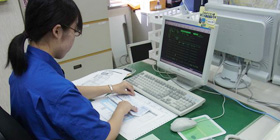 At Sakata Warehouse, each office sets identical operational scopes for each shipper. We compile and compare the number of occurrences and ratios of the following items across offices. This facilitates the analysis of causes and the implementation of improvement activities.
① Warehouse Operational Errors
Total count of operational errors within the warehouse. Errors discovered and corrected immediately before shipping are also counted.
② Mis-shipping
Total count of shipping errors involving incorrect items or quantities compared to the order (shipping instructions).
③ Transport Accidents
Total count of occurrences of damage, soiling, delays, or losses during transport and delivery.
(2) Operations Improvement through PDCA Cycle
We continue operations improvement initiatives by running the PDCA cycle at the office and team levels.
① Plan
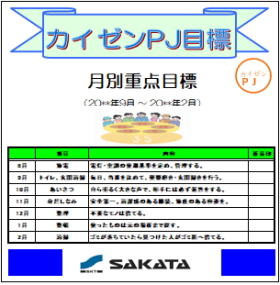 |
【Setting Improvement Goals】 【Verifying Results through Continuous Activities】 |
|---|
② Do
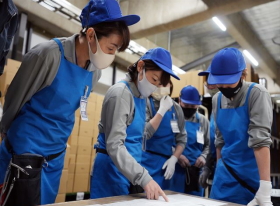 |
【Kaizen Activities】 ・Drafting improvement plans ・Ensuring correct operations ・Creating To-Do lists ・Compiling monthly results |
|---|
③ Check
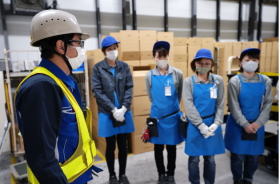 |
【Issue Identification and Analysis】 ・Proposals for error prevention ・Immediate response to errors ・Post-error cause investigation |
|---|
④ Action
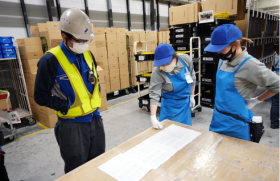 |
【Verification of Improvement Results】 【Information Sharing of Identified Issues and Solutions】 |
|---|
(3) Internal Awareness Reform
Sakata Warehouse actively works to raise internal awareness regarding quality management.
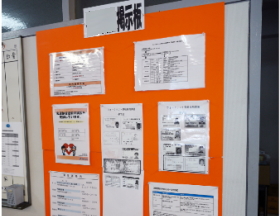 |
① 5S Promotion
We consistently instill thorough 5S practices within our warehouses across the company. |
|---|
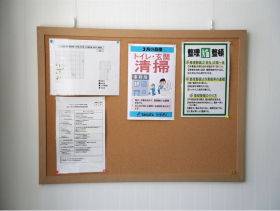 |
② Monthly Poster Displays
Each month, we display posters focusing on items like “Sorting,” “Cleaning,” or “Greetings” to ensure thorough awareness among employees. |
|---|
(4) Middle Management Employee Training
Sakata Warehouse provides education for middle management on standard management methods required to operate a logistics center.
(Training Examples)
① WMS (Inbound to Outbound) and inspection system standard operations.
② Understanding standard logistics productivity metrics and calculation methods.
③ Profit and loss management methods for each shipper.
④ Techniques for identifying improvement points and Kaizen methods in warehouses.
⑤ Report meetings on 5S and quality management cases from each office.
(5) Quality Improvement Initiatives with Shippers
 |
Sakata Warehouse provides regular feedback to shippers regarding 5S initiatives and quality improvement activities through visits and reports. This builds a system where we work together toward quality improvement through consistent communication. |
|---|
 Winner of the 23rd Excellent Case Award 2009
|
|
 Sakata Warehouse is honored to have received the 23rd Excellent Case Award at the “All Japan Logistics Improvement Case Study Convention 2009.” This award system recognizes outstanding improvement achievements in practical logistics. The convention serves as a platform where logistics professionals share “hints for efficiency” and “know-how” through presentations of improvement cases from the field.
|
|
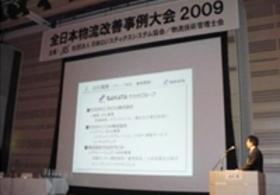 A key reason for Sakata Warehouse’s high evaluation was achieving logistics quality improvement through information systems, contributing to the initial goals of CS and ES. This was realized through shipping support systems that prevent picking errors and status management systems that handle order changes—a root cause of mistakes.
The photo above shows the award received. The photo below shows Mr. Watanabe giving a lecture titled “Quality Improvement Initiatives for CS.ES: Challenging Zero Logistics Errors through Information Utilization.”
Date: April 23, 2009
Speaker: Masaru Watanabe, Deputy General Manager, Sales Operations Dept., Sakata Warehouse Inc.
 Introduction of Office Quality Initiatives
Sakata Warehouse ensures thorough quality management at each office. This fosters an environment where every employee on-site thinks proactively and innovates to drive improvements. Consequently, we continue to surpass the very high quality standards within the industry year after year.
Quality Improvement Case Study: Izumiotsu Office
(1) Warehouse Data Analysis and Improvement Planning
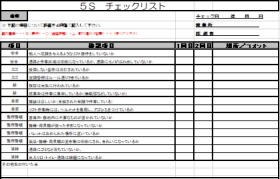 |
We track current warehouse conditions through numerical data. By performing this monthly, we have established a system to identify trends and devise improvement measures. |
|---|
(2) Quality Improvement Status through CS Activities
 |
Every year, we quantify customer feedback and analyze trends to assist in developing further improvement measures. |
|---|
(3) 5S Initiatives and Warehouse Inspections
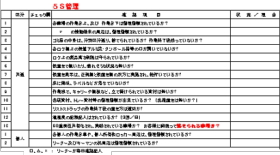 |
We created an original 5S checklist that all staff members use weekly. Based on results, an internal committee performs further “Yellow Card” checks to ensure improvements are reported and standards are maintained. |
|---|
(4) Displaying 5S Progress and Promotion Status
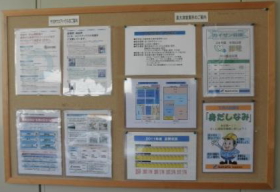 |
We display promotion status within the office to maintain awareness among all employees. Displayed items include: ・Consecutive days of “Zero Mis-shipping” ・Location organization standards ・5S progress status ・5S Kaizen examples |
|---|
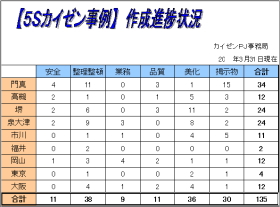
(5) Annual Activity Result Reports
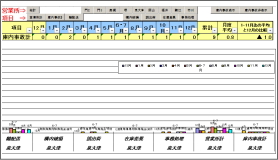 |
We track the cumulative results of 5S initiatives annually. Thorough daily communication ensures that every on-site employee maintains a high awareness of quality improvement. |
|---|
“`